
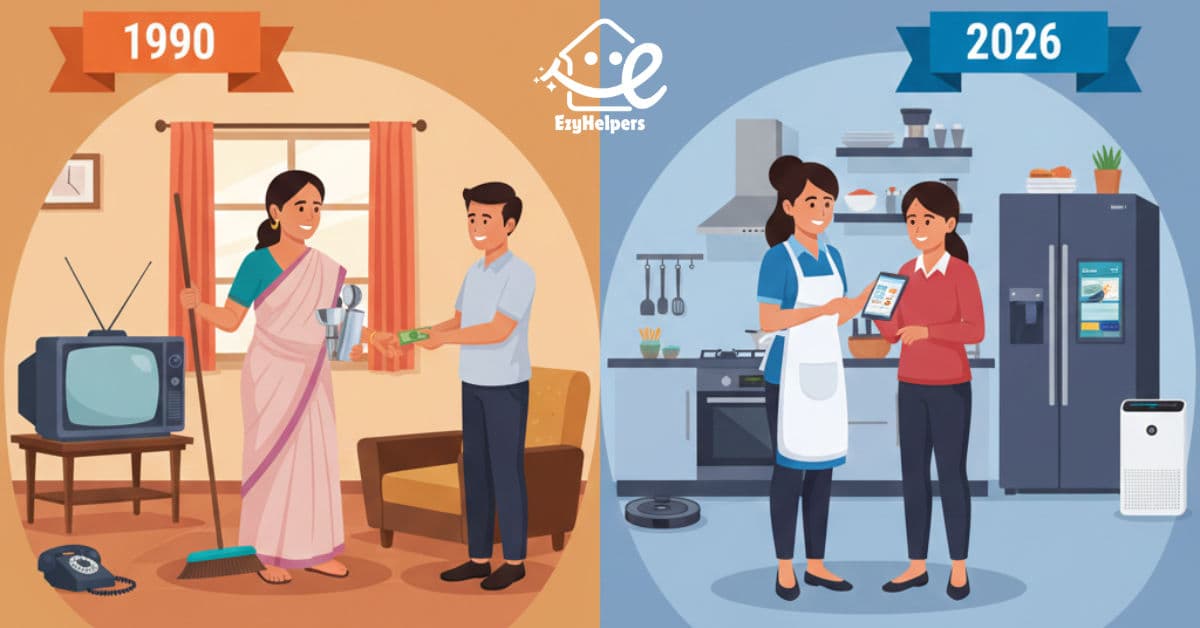
The Evolution of House Maid Services in India: 1990 vs. 2026
If you grew up in an Indian household in the '90s, you know how families found help: word-of-mouth. Today, the industry has undergone a massive transformation.
The 1990s: Word of Mouth
- Recruitment via neighbors or relatives.
- No background checks or written contracts.
- Verbal understanding and cash payments.
- No fixed hours or formal rights.
The 2000s: A Slow Shift
Nuclear families in cities became more dependent on help. Small local agencies appeared, marking the beginning of organized referral services.
The 2010s: Technology and Startup Boom
Apps and platforms arrived, adding trust and accountability. Background verification became standard, and specialized hiring (cooking, childcare) grew.
2026: The Modern Landscape
1. Verified and Trained Staff
Agencies now conduct Aadhaar verification and skill training before onboarding.
2. Flexible Hiring Models
Part-time, live-in, or task-based assistance is now easily accessible.
3. Digital Convenience
Finding and paying for staff happens through smartphones.
4. Growing Rights and Awareness
Fair wages, paid leave, and legal protection are increasingly standard.
1990 vs. 2026: A Quick Comparison
| Aspect | 1990s | 2026 |
|---|---|---|
| Hiring Method | Word of mouth | Verified online platforms |
| Background Checks | Rarely done | Standard Aadhaar/Police verification |
| Service Specialisation | General chores | Specific roles (Cook, Nanny) |
| Work Agreements | Verbal | Written contracts |
| Payment | Cash | Digital & Structured |
Why This Evolution Matters
Professionalization brings dignity to workers and reliability to employers. The future aims for social security and health insurance for every house helper in India.
Ready to hire verified domestic help? Get started with EzyHelpers today!