
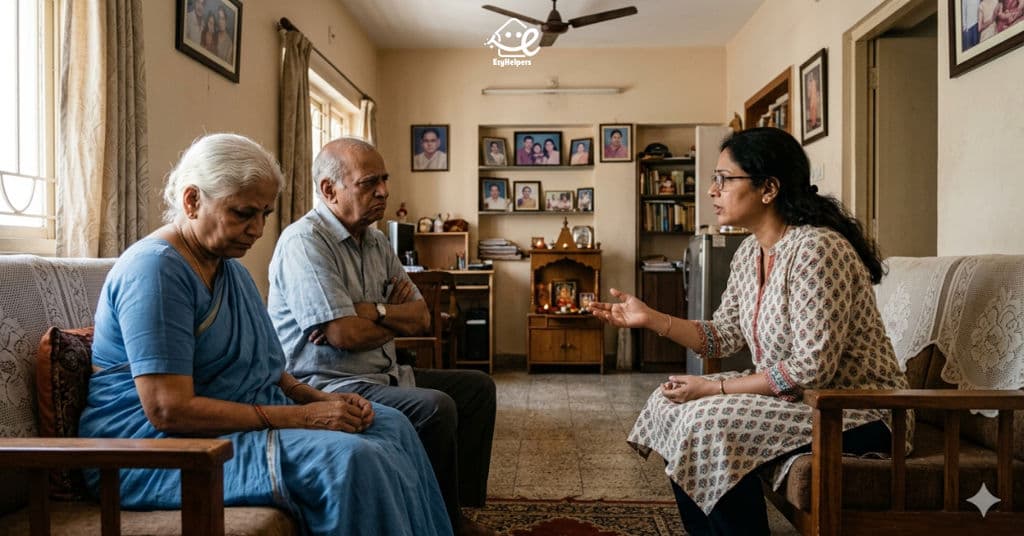
If you've ever tried arranging home care for elderly parents, you already know how the conversation goes. You notice they are getting tired more easily. Maybe the house isn't as organised as before. Medicines are missed occasionally. Daily chores look exhausting. You gently suggest hiring support. And immediately comes the response: "I'm perfectly fine." "I don't need strangers in my house." "I've managed all my life." For many Indian families, this is a deeply emotional and confusing situation. Adult children want the best home care for ageing parents, but elderly parents refusing help is more common than most families expect, even when they clearly need it. So how do you balance respect, independence, and safety? Let's talk about what's really happening and what you can actually do.
Why Elderly Parents in India Refuse Help at Home
Understanding the emotional side makes everything easier. For most seniors, dealing with elderly parents who refuse help isn't just a practical challenge; it feels deeply personal to them.
Independence Is Their Identity
Your parents spent decades caring for the family. Cooking, managing finances, raising children, and running households gave them purpose. Accepting help may feel like losing control over their own lives.
Trust and Privacy Concerns
Indian homes are private spaces. Allowing a caregiver for elderly parents inside can feel uncomfortable, especially if they have never experienced home care for the elderly before.
Cultural Mindset
Earlier generations believed family members should handle caregiving themselves. Professional elder care in India is still a relatively new concept for many seniors.
Fear of ageing
Sometimes refusal is simply denial. Accepting help means acknowledging physical limitations, and that can be emotionally difficult.
The Reality Adult Children Face Today
Life in modern India looks very different from what our parents experienced. Many families today are dealing with:
- Dual-income households
- Long working hours
- An elderly parent is alone at home in India while children live in another city
- Parenting responsibilities alongside elder care
You want to focus on caring for your parents properly, but time, distance, and responsibilities make it challenging. This creates guilt, a feeling many working professionals silently carry every day.
Here's an important truth: 👉 Caring about your parents is not always enough. Structured elderly care at home is sometimes necessary.
Mistakes Families Often Make
When worry increases, families sometimes take steps that create more resistance.
Forcing the Decision
Hiring a caregiver for elderly parents without prior discussion can make them feel ignored or disrespected.
Using Fear-Based Arguments
Saying things like "What if you fall?" may create anxiety instead of cooperation.
Treating Them Like Patients
Your parent wants dignity, not supervision. The approach matters more than the solution.
How to Introduce Home Care for Elderly Parents Without Conflict
The key is gradual acceptance, not sudden change.
Start Small
Instead of full-time caregiving, begin with light assistance:
- Cooking help
- House cleaning
- Errand support Small changes feel less threatening.
Change the Language
Avoid phrases like "care" or "dependence." Try saying:
- "Extra support"
- "Someone to make things easier"
- "Help with daily work" Position it as comfort, not necessity.
Give Them Control
Let parents choose:
- Working hours
- Type of assistance
- Responsibilities
- Caregiver preferences When they feel included, resistance reduces.
Make It About Your Peace of Mind
Many parents accept help when they understand it reduces their child's worry. You can say: "I'll feel relaxed knowing someone is around."
When Do Elderly Parents Need Help? Signs to Watch For
Families often delay arranging home care for ageing parents until an emergency happens. Knowing when elderly parents need help can prevent a crisis before it occurs.
Watch for early warning signs:
- Forgetting medications
- Increased fatigue
- Difficulty managing household tasks
- Reduced mobility
- Loneliness or withdrawal
- Minor slips or balance issues
- Poor eating habits
Early intervention prevents bigger health risks later.
How Modern Home Care Services for the Elderly Help Them
Elder care in India has evolved significantly over the past decade. Today's aged care services at home focus on maintaining independence while ensuring safety.
Support can include:
- Assistance with daily routines
- Meal preparation and nutrition support
- Medication reminders
- Mobility assistance
- Personal hygiene helps
- Companionship and emotional support
- Post-hospital recovery assistance
The biggest advantage? Your parents continue living comfortably in their own home and surrounded by familiar memories and routines.
The Often Ignored Benefit: Companionship
Physical help is important, but emotional well-being matters just as much. Many seniors experience loneliness, especially when children live away or work long hours. An elderly parent alone at home in India is more vulnerable, not just physically, but emotionally.
A caregiver providing help for the elderly often becomes:
- A daily companion
- A conversation partner
- A reassuring presence in emergencies
Families frequently notice improved mood, better routines, and renewed energy once regular support begins.
Respecting Independence While Ensuring Safety
Indian values teach us to respect elders, but respect also means protecting their well-being. Arranging professional support is not replacing family care. It strengthens it. When responsibilities are shared, you can focus on being a loving son or daughter rather than feeling constantly stressed or guilty. Proper care today often involves combining family love with professional home care for elderly parents, and that is something to feel good about, not guilty over.
How to Talk to Parents About Home Care (A Simple Approach)
If you're unsure how to begin, try this gentle structure:
- Appreciate them: "You've always taken care of all of us."
- Share concern calmly: "I worry when you handle everything alone."
- Suggest a trial period: "Let's try help for a few days and see how it feels."
- Keep the decision flexible: "If you're uncomfortable, we can change it."
A trial approach removes pressure and builds trust naturally.
Final Thoughts: Care Is About Quality of Life
When a parent refuses help, it doesn't mean they don't need support; it simply means the transition needs patience. If you are considering finding a caregiver for your elderly parent, the first step is always an honest, calm conversation, not a sudden decision. Today, more Indian families are choosing home care for elderly loved ones to ensure safety, comfort, and emotional well-being without disturbing independence. Because the goal isn't dependency. It's dignity, peace of mind, and a better quality of life for parents and for you.