
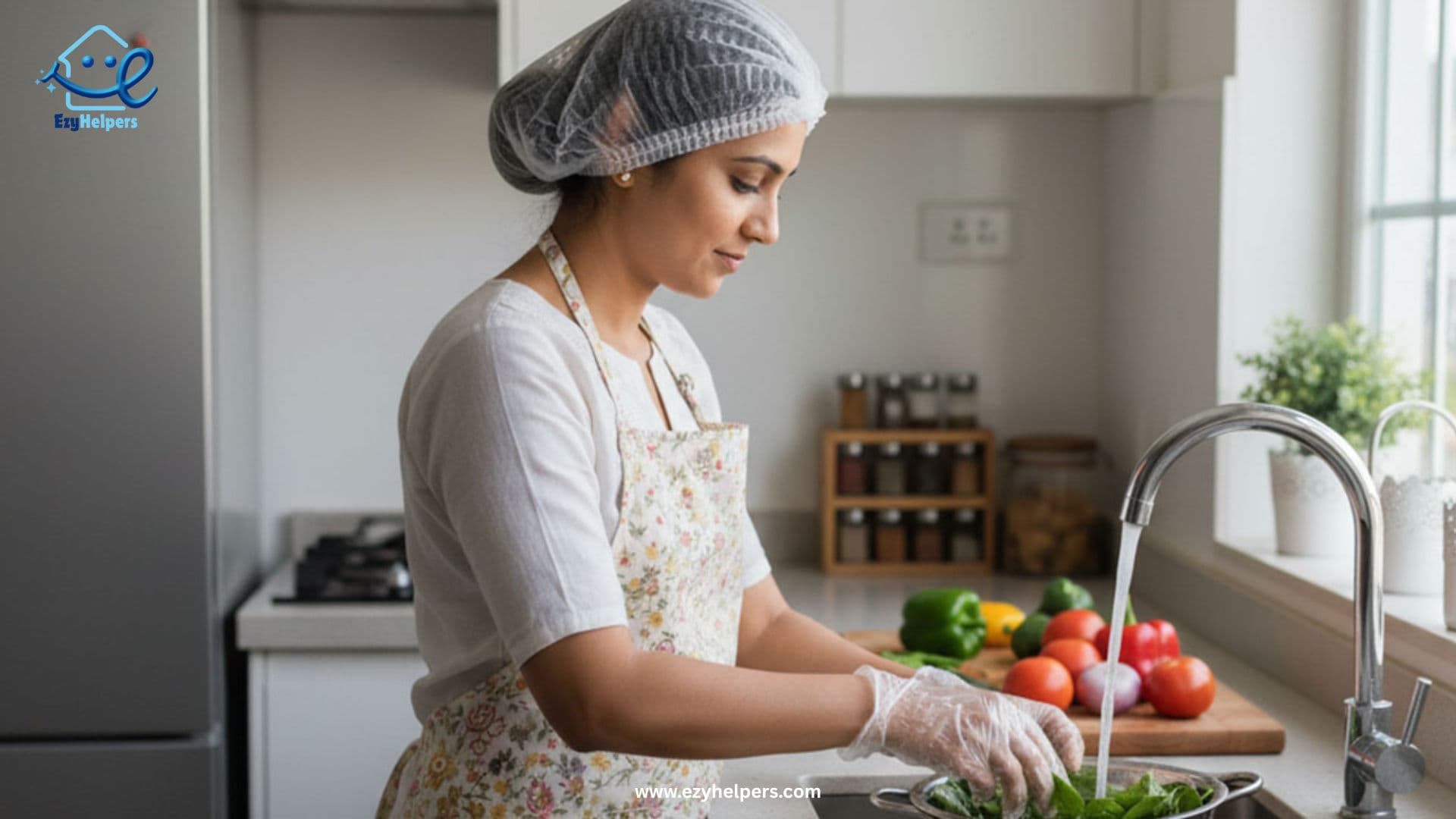
Hiring a home cook in India requires strict personal Kitchen Hygiene and adherence to personal hygiene rules for cooking. From clean hands and proper food handling to safe storage and utensil hygiene, these tips keep your meals safe. EzyHelpers provides trained, verified cooks who respect cultural practices while maintaining high hygiene standards.
In India, most households rely on home cooks to prepare fresh meals daily. From morning breakfast to hot chapatis at dinner, these cooks are essential to family life. While they save time and effort, they also work in one of the most sensitive areas of your home—The Kitchen.
When an external cook handles food in your kitchen, personal kitchen hygiene becomes critical. Poor hygiene can lead to foodborne illnesses, contamination, and long-term health issues. (https://www.who.int/news-room/fact-sheets/detail/food-safety) Indian meals often involve perishable ingredients like milk, curd, vegetables, fish, and meat, making high hygiene standards non-negotiable, as emphasized by FSSAI food safety guidelines.
At EzyHelpers, we don’t just send a cook; we provide trained professionals who follow personal hygiene rules for cooking, respect cultural practices, and ensure safety in every meal. Here’s a detailed guide to the most important hygiene rules your home cook should follow.
1. Personal Hygiene of the Home Cook
The personal cleanliness of your home cook directly impacts the safety of your meals. Daily visiting cooks must follow strict personal hygiene rules for cooking before entering your kitchen.
Essential personal hygiene practices include:
- ✅ Clean hands always: Wash hands with soap before cooking and after handling raw ingredients.
- ✅ Trimmed nails & no jewellery: Long nails, rings, or bangles can trap dirt and spread bacteria.
- ✅ Neat clothing: Wear clean clothes or an apron to prevent contamination from outside attire.
- ✅ Health checks: If unwell (cough, cold, infection), the cook should not prepare meals.
By enforcing these rules, you protect your family from harmful bacteria and maintain high standards of home-cook hygiene practices.
2. Kitchen Hygiene While Working at Your Home
Unlike restaurants, home kitchens are smaller and often shared. A cook should respect the kitchen by following hygiene best practices for safe food handling in Indian kitchens.
Key Hygiene Practices for Home Kitchens:
- ✅ Sanitized surfaces: Clean kitchen slabs, stove areas, and cutting boards before and after use.
- ✅ Separate chopping boards: One board for vegetables, another for meat/fish to prevent cross-contamination.
- ✅ Proper waste disposal: Clear kitchen waste daily to avoid bad odors, flies, and pests.
- ✅ Ventilation & airflow: Keep windows, chimneys, and fans clean for fresh air.
Following these practices ensures a safe and organized cooking environment while reinforcing clean cooking habits for domestic cooks.
3. Food Handling & Preparation Rules
Indian cooking involves raw vegetables, dairy, meat, and spices, which can harbor bacteria if not handled properly. When meals are prepared by a home cook, following strict personal kitchen hygiene is essential.
Best Practices for Food Handling include:
- ✅ Wash vegetables and fruits thoroughly to remove dirt and pesticides.
- ✅ Defrost meat in the refrigerator, never at room temperature.
- ✅ Cook food at proper temperatures to eliminate harmful bacteria.
- ✅ Avoid reusing leftover cooking oil, which can degrade and harm health.
- ✅ Cover food immediately after cooking to protect it from dust and insects.
These rules form the backbone of personal hygiene rules for cooking and safeguard your family from contamination.
4. Storage Hygiene in Your Kitchen
Improper storage is a common cause of food spoilage. Your home cook should know how to store ingredients safely to maintain home cook hygiene practices.
Safe storage practices include:
- ✅ Refrigerate perishables like milk, paneer, curd, and meat promptly.
- ✅ Store dry goods such as rice, flour, and pulses in airtight containers.
- ✅ Check expiry dates on packaged foods before use.
- ✅ Never mix raw and cooked food in the same container.
Proper storage enhances personal kitchen hygiene and maintains the nutritional quality of meals.
5. Utensil & Cookware Hygiene
Everyday utensils, if not cleaned properly, can become breeding grounds for germs. Your home cook plays a major role in keeping them hygienic.
Rules for utensil hygiene include:
- ✅ Wash utensils with hot water and mild detergent.
- ✅ Replace scrubbers regularly; avoid using worn-out, greasy ones.
- ✅ Use separate utensils for vegetarian and non-vegetarian dishes if required.
- ✅ Do not leave spoons or ladles inside food for long periods.
Maintaining clean utensils ensures meals remain safe, wholesome, and in line with personal kitchen hygiene.
6. Serving & Leftover Hygiene
In Indian homes, meals are often prepared in bulk. Handling serving and leftovers properly is as important as cooking.
Serving and leftover hygiene practices include:
- ✅ Serve food hot whenever possible.
- ✅ Use clean serving spoons and plates each time.
- ✅ Refrigerate leftovers within two hours of cooking.
- ✅ Reheat leftovers thoroughly before serving again.
These steps prevent foodborne illnesses and reflect strong personal hygiene rules for cooking.
7. Cultural Sensitivity & Hygiene in Indian Homes
Hygiene in India is often linked to religious and cultural practices. Some families maintain separate utensils for non-veg cooking, while others follow fasting or festival-based cooking restrictions.
Examples of cultural hygiene practices:
- ✅ Maintain separate zones and utensils for vegetarian and non-vegetarian cooking.
- ✅ Use dedicated vessels and tools for puja, prasadam, or temple offerings.
- ✅ Clean and sanitize cooking areas before and after special festival meals.
Common Hygiene Mistakes by Home Cooks in India
Many families hire local cooks without proper checks. Common mistakes include:
- ❌ Not washing hands after handling raw chicken or fish.
- ❌ Using the same knife for meat and vegetables.
- ❌ Storing cooked food uncovered.
- ❌ Wearing outside footwear in the kitchen.
- ❌ Using unwashed kitchen towels repeatedly.
How EzyHelpers Ensures Hygienic Cooks for Your Home
Unlike unverified local hires, EzyHelpers provides professional home cooks who are:
- ✅ Background verified for safety.
- ✅ Trained in hygiene rules and safe cooking practices.
- ✅ Experienced in Indian kitchens, from traditional chapati making to modern recipes.
- ✅ Flexible with family needs: vegetarian, non-vegetarian, or diet-specific.
- ✅ Respectful of cultural practices in Indian homes.
With EzyHelpers, you enjoy taste and safety, with personal kitchen hygiene guaranteed.
Lesser-Known Hygiene Secrets Every Cook Should Know
The 4-Hour Rule for Indian Gravies
Indian curries and gravies with dairy (paneer makhani, malai kofta) should not sit at room temperature for more than 4 hours. Dairy, oil, and spices can create an ideal environment for bacterial growth.
Wooden Utensils Can Harbor Bacteria
Traditional wooden spoons may trap bacteria in their pores. Always dry them thoroughly after washing and replace them every six months.
Oil Temperature and Safety
Reusing oil isn’t just about taste; oil above 180°C can break down and harbor harmful compounds. Test the oil with a small piece of bread; it should brown in 10 seconds.
Pickle Serving Hygiene
Pickles are preserved, but moisture and bacteria can enter jars via used spoons. Always use a dry spoon and never return a used one.
Pressure Cooker Safety
Leaving cooked dal or rice in a closed pressure cooker creates a warm, moist environment ideal for bacteria. Transfer cooked food to serving vessels immediately.
Turmeric Myth
While turmeric has antibacterial properties, it cannot replace personal hygiene rules for cooking. Many cooks rely too heavily on turmeric's natural properties while neglecting basic cleanliness. Proper cleanliness is always necessary.
Final Thoughts
Food is the heart of every Indian household, but safety depends on preparation. Following personal kitchen hygiene and personal hygiene rules for cooking protects your family from foodborne illnesses while allowing you to enjoy wholesome, tasty meals.
Hiring professional cooks through EzyHelpers ensures trained cooks bring both flavor and hygiene to your kitchen.