
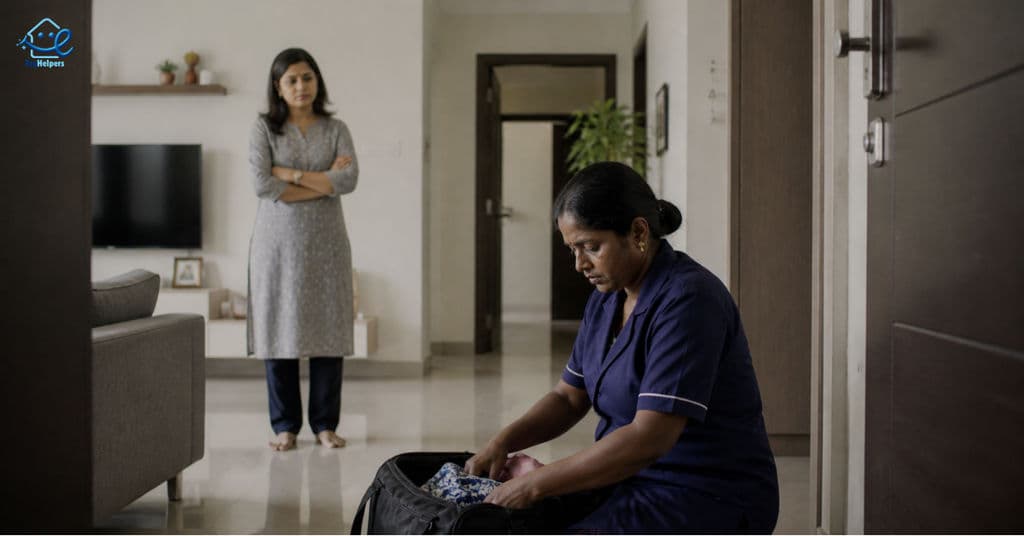
You hired her with so much hope.
You spent weeks searching, paid the agency fee, went through the interviews, and finally, finally, found someone who seemed like the right fit. You showed her the house, explained the routines, and introduced her to the kids. You thought: this time, it'll work out.
Then, three months later, she's gone. No warning. Sometimes, not even a goodbye.
If you've experienced this, you're not alone. Maid problems are one of the most common (and most quietly painful) struggles that families face. And the question that keeps coming up, the one nobody wants to answer honestly, is this:
Why do maids run away?
The answer isn't simple. But it is important. And if you're serious about finding a long-term helper who actually stays, you need to hear it.
The Problem Nobody Talks About Openly
When a domestic helper leaves suddenly, most employers react the same way: frustration, betrayal, and then a quick return to the agency to "find someone better."
But here's the hard truth: the cycle repeats itself. Same family. New helper. Same outcome.
This isn't a coincidence. And it's not always about finding the right person. More often than not, it's about creating the right environment.
Maid problems rarely start with the maid.
Reason #1: They Feel Like They Disappeared as a Person
Imagine moving into a stranger's house. You sleep in a small room, wake up before everyone else, and go to bed after everyone else. You cook meals you don't eat with the family. You care for children who run to someone else when they fall. You're present everywhere, but acknowledged nowhere.
This is the daily reality for many domestic helpers.
One of the most common reasons helpers leave is simple: they don't feel seen. Not as workers with complaints, but as human beings with dignity. When employers don't greet them in the morning, speak to them only to give instructions, or discuss their performance in front of others, it creates a quiet but deep wound.
People, regardless of their job, need to feel that they matter. When a helper doesn't feel that, they start looking for a way out.
What to do: Start small. Good morning. Thank you. How are you feeling today? These aren't just pleasantries; they're signals that you see her as a person, not just a function.
Reason #2: The Expectations Were Never Clearly Set
She thought she'd be helping with cooking and childcare. You expected her to also handle laundry, grocery runs, driving the kids, and managing your elderly parent's medications, all before noon.
Unclear expectations are at the heart of so many maid problems. What's written in the contract and what happens in real life can be vastly different. And when helpers feel like the goalposts keep moving (more tasks added, schedules changed without notice, responsibilities piled on without acknowledgement) resentment builds fast.
Some helpers won't say anything. They'll quietly endure, until one day, they simply don't come back.
What to do: Have an honest conversation before she starts. Write down the tasks. Revisit expectations every month. Create space for her to tell you if something feels unmanageable. You may be surprised by how much a simple conversation can change.
Reason #3: There's No Rest, and No Privacy
A domestic helper's job doesn't come with a clock-out time. When she lives in your home, the boundaries between working hours and personal time can blur almost entirely. Called during her break. Asked to babysit on her day off. Expected to be "on call" even when she's trying to sleep.
Rest is not a luxury; it's a basic human need. When a helper is consistently denied proper rest or personal space, burnout follows quickly. And burnout looks a lot like someone who "suddenly" stops caring, starts making more mistakes, or disappears without notice.
The helpers who run away are often not running from you. They're running toward rest.
What to do: Be clear about working hours and stick to them. Ensure she has a private, comfortable space that is genuinely hers. Honor her day off without guilt-tripping or piling on extra work "just this once."
Reason #4: She Doesn't Feel Safe Raising Concerns
Here's a scenario: the helper is being asked to do something outside of what was agreed. Or she's not feeling well. Or a family member is speaking to her in a way that makes her uncomfortable.
Does she feel safe telling you?
In many households, the answer is no. There's an imbalance of power in the employer-helper relationship that makes it genuinely difficult for helpers to speak up. If they've seen or heard of helpers being scolded, dismissed, or punished for raising concerns, they will stay silent and start planning their exit.
Silence is not the same as satisfaction. A helper who never complains is not necessarily a helper who is happy.
What to do: Create a regular check-in, once a week or every two weeks, where you genuinely ask: Is there anything that's been bothering you? Is there anything we can do better? And then listen without becoming defensive.
Reason #5: The Pay or Benefits Don't Match the Work
This one is straightforward, but it's often overlooked because employers assume that just offering a job is enough. It isn't.
If a helper is doing the work of two people (full-time childcare plus full household management plus elder care) but receiving pay for a standard role, she will eventually realise the imbalance. And she will leave.
Additionally, small things matter enormously: Is she eating proper meals? Does she have access to medical care if she gets sick? Is she receiving her agreed-upon pay on time, every time? Are there unexpected deductions that leave her with less than she expected?
These aren't just HR policies. They are the foundation of trust.
What to do: Review whether the compensation genuinely reflects the work being done. Even small gestures like a bonus during the holidays, a small raise after six months, or covering her medical costs go a long way in building loyalty.
Reason #6: The Home Environment Is Too Stressful
Households with frequent conflict, including arguments between spouses, tension between family members, children who are difficult to manage, or an overall atmosphere of stress, are deeply draining for helpers to live and work in.
Remember: she doesn't just work in your home. She lives in it. She absorbs the emotional climate of your household constantly, with no escape.
If the environment is unpredictable or emotionally volatile, even the most committed helper will start dreading waking up in the morning.
What to do: While you can't always control family dynamics, you can be mindful of how conflict is handled in front of or involving your helper. Protect her from being caught in the middle of household tensions.
So, How Do You Deal With Maid Problems Before They Start?
The families who rarely experience maid problems aren't necessarily the wealthiest or the ones with the easiest households. They're the ones who have done the internal work of asking: What kind of employer am I?
Here's a quick self-check:
- Do I treat my helper with consistent respect and warmth?
- Are my expectations clearly communicated and reasonable?
- Does she have real rest time and personal space?
- Is she comfortable raising concerns without fear?
- Am I compensating her fairly for what I'm actually asking her to do?
- Is my home environment one that a person can thrive in?
If you answered no to several of these, the maid problem isn't really a maid problem.
The Helpers Who Stay: What Makes the Difference?
Talk to any domestic helper who has stayed with the same family for five, eight, or ten years, and you'll hear the same things: "They treat me like family." "They respect my time off." "They talk to me, not at me." "When I was sick, they took care of me."
Longevity in this relationship is not about luck. It's about intentional, respectful management of another human being's life.
The good news? These things are learnable. They're not about spending more money or finding the "perfect" helper. They're about showing up as a decent, fair, and thoughtful employer, every single day.
Final Thoughts: Rethink the Question
The next time you find yourself asking why do maids run away, try reframing the question. Instead of "What's wrong with her?", ask: "What can I do differently?"
That shift, small as it sounds, is where everything changes.
Because the domestic helpers who feel respected, fairly treated, and genuinely cared for don't run. They stay. They invest. They become a trusted part of your family's story.
And that's exactly the kind of relationship that makes everyone's life better.
Looking for reliable, well-matched domestic help and the support to make the relationship work long-term?
Contact us today to find out how we help families build lasting, healthy working relationships with their helpers.